

If you’ve ever parked your car in a Texas parking lot in July, you know the feeling: you open the door and a wall of heat hits you like a physical punch. It’s enough to make you want to paint your windows solid black. But before you go full “secret service” on your windshield, you need to know the rules. Texas doesn’t play when it comes to road safety and visibility.
At King Tint & Detail, we’ve seen it all from the DIY “bubble special” to high-end ceramic wraps that make a sedan look like a million bucks. One of the most common questions we get at our Pflugerville and Austin-area shops is: “What is the darkest tint allowed in Texas?” The answer isn’t just a single number; it depends on which window you’re talking about and what kind of vehicle you’re driving. In this guide, we’re breaking down the 2026 Texas window tint laws so you can get that sleek look without getting a “fix-it” ticket or failing your next inspection.

Understanding VLT: The Language of Shade
Before we dive into the percentages, we have to talk about VLT, or Visible Light Transmission. This is the metric used by the Texas Department of Public Safety (DPS) to determine if your car is legal.
- High VLT (70% – 90%): Very light. Blocks heat but looks almost clear.
- Medium VLT (25% – 35%): The “sweet spot” for most Texas drivers.
- Low VLT (5%): “Limo tint.” You can’t see in, and at night, you can barely see out.
In Texas, the magic number for your front windows is 25%. But here’s the catch: that 25% is the net VLT. Since factory glass usually has a slight tint already (often around 70-80%), putting a 25% film on top of it will actually drop your total VLT below the legal limit. This is why professional shops like King Tint & Detail use specialized meters to ensure your final result stays within the law.
The Front Row: The 25% Rule
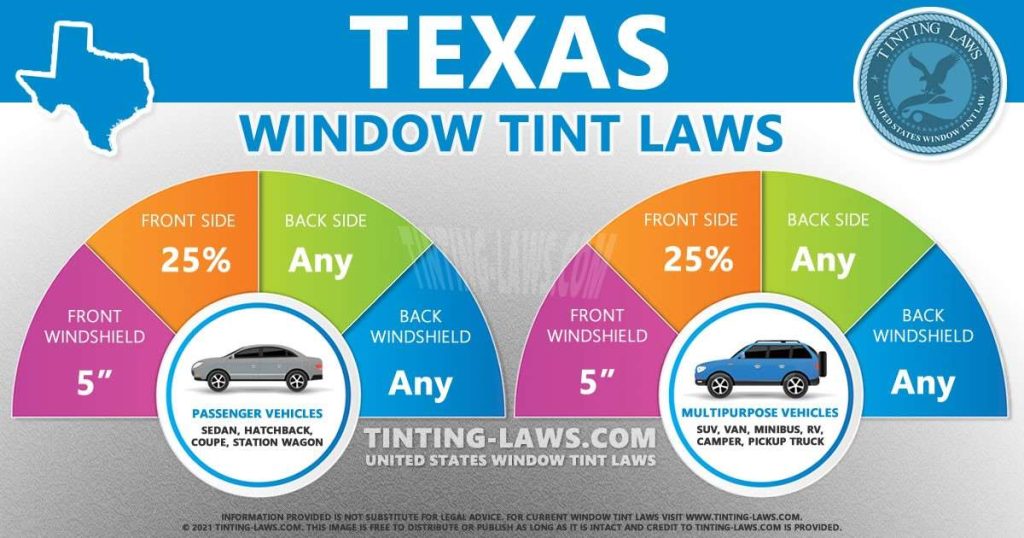
For the safety of law enforcement and other drivers, Texas is very strict about the front half of your vehicle. Whether you drive a tiny coupe or a massive dually truck, the darkest tint allowed in Texas for your front side windows (the ones next to the driver and passenger) is 25% VLT.
- The Law: You must allow at least 25% of light to pass through the front side windows.
- The Reflection: Your tint cannot be more than 25% reflective. If your car looks like a literal mirror, expect to be pulled over.
- The Sticker: Texas law requires a tiny compliance sticker to be placed between the film and the glass on the driver’s side window. If you don’t have this, you technically aren’t legal even if the shade is right.
Pro Tip: Don’t risk a ticket by trying to “eye-ball” 25%. Most DIY kits don’t account for the factory glass darkness. At King Tint & Detail, we use precision-cut ceramic films that are guaranteed to meet the darkest tint allowed in Texas standards while providing maximum heat rejection.
The Back Row: Where Things Get Dark
This is where Texas gets a little more relaxed. If you have an SUV, Van, or Truck, the rules for the back side windows (the ones behind the driver) are much more lenient.
For Multi-Purpose Vehicles (SUVs, Trucks, Vans):
- Back Side Windows: There is no limit. You can go as dark as you want. Want 5% limo tint so your kids can nap in total darkness? Go for it.
- Rear Windshield: Any darkness is allowed, provided you have dual side mirrors that give you a 200-foot view behind the vehicle.
For Passenger Cars (Sedans, Coupes):
- Historically, Texas required the rear side windows of sedans to stay at 25%. However, current 2026 regulations allow for much more flexibility. As long as you have those dual side mirrors, you can generally go darker on the rear half of the vehicle.
The Windshield: The “Eyebrow” Rule
You cannot tint your entire windshield in Texas (unless you have a specific medical exemption—more on that in a second). However, you are allowed a “visor strip” or “eyebrow” at the top.
The darkest tint allowed in Texas for a windshield strip must follow these rules:
- Placement: It must stay above the AS-1 line. If your windshield doesn’t have a visible AS-1 line, the tint cannot extend more than 5 inches down from the top.
- Shade: The strip must have a VLT of 25% or higher.
- Clear Film Exception: You are allowed to apply a completely clear, un-tinted UV protection film to the entire windshield. This is a game-changer for Texas heat because it blocks 99% of UV rays without changing your visibility.
Why Quality Matters: Ceramic vs. Carbon
If you’re chasing the darkest tint allowed in Texas just to stay cool, you might be looking at it the wrong way. Back in the day, the only way to block heat was to go darker. Today, technology has changed the game.
At King Tint & Detail, we specialize in Ceramic Tint. Unlike cheap dyed films that turn purple and bubble after one summer, ceramic film contains nano-ceramic particles that block infrared light (the stuff that actually feels hot) without needing to be pitch black.
| Feature | Dyed Tint | Carbon Tint | Ceramic Tint |
| Heat Rejection | Low | Medium | High |
| UV Protection | Minimal | Good | Excellent (99%) |
| Longevity | 1-2 Years | 5+ Years | Lifetime |
| Clarity | Can be hazy | Good | Crystal Clear |
Medical Exemptions: When 25% Isn’t Enough
Do you have a medical condition like Lupus, solar urticaria, or extreme light sensitivity? Texas does provide a path for darker-than-legal tint.
To qualify for a medical exemption, you need:
- A signed statement from a licensed physician or optometrist.
- The statement must specifically identify the driver or occupant with the condition and state that the darker tint is a medical necessity.
- As of recent updates, you no longer need a special certificate from the DPS, but you must keep that physician’s letter in your vehicle at all times to show law enforcement during a stop or inspection.
The Penalties: What Happens if You’re Caught?
Texas law enforcement officers are equipped with portable light meters. If they suspect your windows are too dark, they can test them on the spot.
- The Fix-It Ticket: Often, a first offense results in a citation that can be dismissed if you show proof that you removed or replaced the illegal tint.
- Fines: If you ignore the ticket or are a repeat offender, fines typically range from $100 to $250.
- Inspection Failure: This is the big one. You cannot renew your vehicle registration in Texas if you fail the safety inspection. If your tint is below 25% on the front windows, the inspector will fail you instantly.

Common Myths About Texas Tint Laws
There is a lot of “bro-science” in the car community. Let’s clear up a few things:
- Myth: “I can have any tint if I have out-of-state plates.”
- Truth: If you are driving on Texas roads, you are subject to Texas equipment laws.
- Myth: “Red and Blue tint are legal if they aren’t dark.”
- Truth: Red, Amber, and Blue tints are strictly prohibited in Texas. These colors are reserved for emergency vehicle lighting and can confuse other drivers.
- Myth: “25% tint is too light to look good.”
- Truth: High-quality ceramic film at 25% looks incredibly sleek and professional. It provides the perfect balance of privacy and visibility.
Conclusion: Trust the Kings of Tint
Navigating the rules for the darkest tint allowed in Texas doesn’t have to be a headache. Whether you’re cruising through Austin or parked in Pflugerville, you deserve a ride that stays cool and looks sharp without the constant fear of a flashing light in your rearview mirror.
At King Tint & Detail, we don’t just slap film on glass. We analyze your vehicle, measure your factory VLT, and help you choose a package that maximizes heat rejection while staying 100% legal. From our “Color Stable” privacy films to our “Super Ceramic” heat-shielding technology, we provide the protection your car needs for the Texas sun.
Ready to transform your ride? Don’t settle for a bubbly, illegal DIY job.